Serving Pennsylvania, New Jersey, and Delaware

Fall Driving in Pennsylvania:
4 Seasonal Hazards Every Driver Should Know

From deer crossings to foggy mornings, fall brings more than colorful scenery to Pennsylvania roads.

Fall is one of the most beautiful times of year in Pennsylvania. The changing leaves, cooler temperatures, and scenic drives throughout Bucks and Montgomery Counties make it a season worth enjoying.

But behind that picture-perfect scenery are some driving conditions that deserve a little extra attention.

As daylight hours grow shorter, wildlife becomes more active, morning fog settles over local roads, and fallen leaves collect on the pavement. Add school buses, student drivers, and busier morning commutes, and even a familiar drive can become more unpredictable.

The good news? A little preparation and awareness can go a long way.

Here are four common fall driving hazards to keep in mind—and why this is also a good time to review your auto insurance coverage.

1. Deer and Wildlife Are on the Move

If you’ve driven through Bucks or Montgomery County during the fall, you probably know that deer sightings aren’t unusual. But this time of year, the risk of encountering one on the road increases.

Fall coincides with deer mating season, commonly known as the rut. Deer are especially active during dawn and dusk, when visibility is already reduced.

Whether you’re traveling a rural back road or a busy suburban roadway, it’s important to stay alert.

A few ways to reduce your risk:

  • Slow down in wooded areas and locations with deer crossing signs.
  • Be especially cautious around sunrise and sunset.
  • Use high beams when appropriate and when no other vehicles are approaching.
  • If you see one deer, watch for others nearby.
  • Avoid swerving suddenly to miss an animal, which could cause you to lose control or collide with another vehicle.

Does Car Insurance Cover Hitting a Deer?

Generally, damage caused by striking a deer or another animal is covered under the comprehensive portion of an auto insurance policy, subject to your deductible and policy terms.

That’s an important distinction because comprehensive coverage is different from collision coverage.

If you’ve removed comprehensive coverage from an older vehicle to reduce your premium, for example, you may not have coverage for damage caused by a deer strike.

It’s worth knowing what’s included in your policy before you need it.

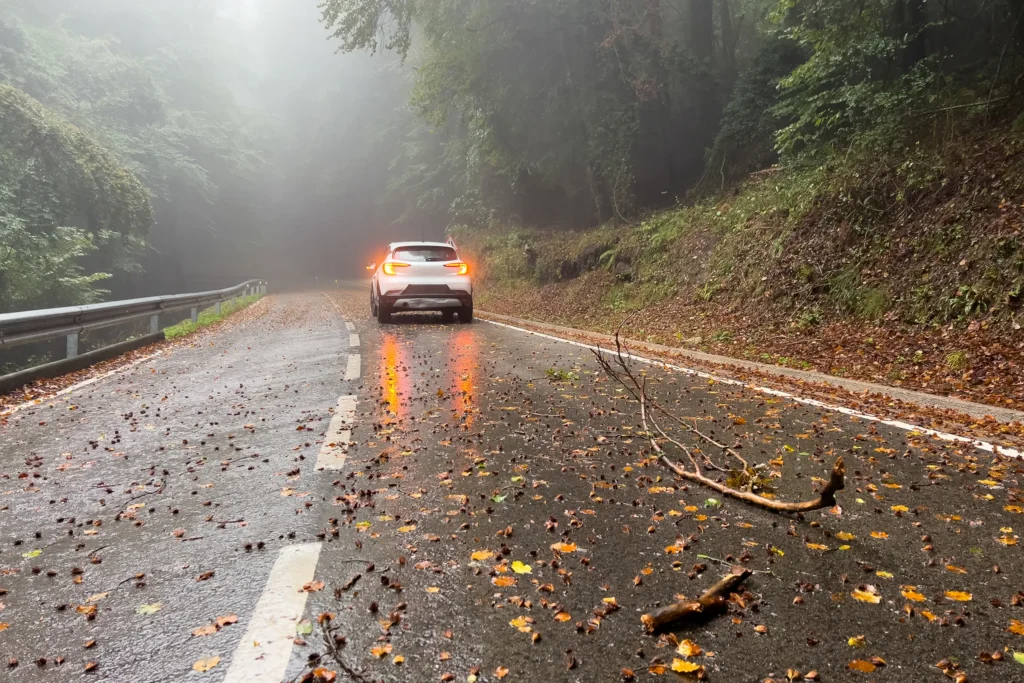
2. Fog Can Turn a Familiar Road Into a Visibility Challenge

Cool fall mornings often bring fog, particularly in low-lying areas, near waterways, and along wooded roads.

A route you’ve driven hundreds of times can suddenly become difficult to navigate when visibility drops.

The biggest danger isn’t necessarily the fog itself. It’s how quickly drivers can approach another vehicle, intersection, or unexpected obstacle without enough time to react.

When driving in fog:

  • Reduce your speed and increase your following distance.
  • Use low-beam headlights rather than high beams, which can reflect off the fog and make visibility worse.
  • Avoid sudden braking or unnecessary lane changes.
  • Use road markings to help maintain your position.
  • If visibility becomes dangerously limited, pull completely off the roadway somewhere safe rather than stopping in a travel lane.

And remember, just because you know the road doesn’t mean you can anticipate everything happening on it.

3. Wet Leaves Can Be Surprisingly Slippery

Those colorful leaves might look beautiful lining the road, but once they become wet, they can create a slippery surface.

Layers of wet leaves can reduce tire traction, particularly when braking, accelerating, or turning.

They can also conceal potholes, road markings, and other hazards.

To stay safer on leaf-covered roads:

  • Reduce your speed, especially around curves and intersections.
  • Allow additional stopping distance.
  • Avoid hard braking or sharp steering movements.
  • Check that your tires have adequate tread.
  • Be mindful of leaf-covered areas where water may be collecting underneath.

What Happens If You Slide on Wet Leaves?

If your vehicle slides on wet leaves and strikes another object, damage to your own vehicle would generally fall under collision coverage, if you carry it, subject to your deductible and policy conditions.

Liability coverage may help address damage or injuries you cause to others, but it typically won’t pay to repair your own vehicle.

Understanding the difference between comprehensive, collision, and liability coverage can help eliminate unpleasant surprises after an accident.

4. School Is Back in Session, and Roads Are Busier

By October, school routines are in full swing.

That means more school buses, pedestrians, cyclists, student drivers, and vehicles navigating morning drop-offs and afternoon pickups.

With shorter days and changing weather conditions, it’s especially important to stay attentive around schools, neighborhoods, and intersections.

A few reminders for the school-year commute:

  • Allow extra travel time during school arrival and dismissal periods.
  • Watch carefully for children crossing streets or walking near roadways.
  • Follow Pennsylvania’s school bus stopping laws.
  • Avoid distractions, especially in areas with heavy pedestrian activity.
  • Give cyclists and pedestrians plenty of room.

Even when you’re running late, a few extra seconds of patience can make a meaningful difference.

Is Your Auto Insurance Ready for the Unexpected?

Most drivers don’t think much about their auto insurance until something happens.

But fall is a good reminder that accidents aren’t always the result of reckless driving. Sometimes they’re caused by an animal crossing the road, an unexpected patch of slippery pavement, or a moment of limited visibility.

And while safe driving habits are your first line of defense, the right insurance coverage can help protect you financially when things don’t go as planned.

This is a good time to ask yourself:

  • Do I have comprehensive and collision coverage?
  • Do I understand what each coverage pays for?
  • Are my deductibles still appropriate for my budget?
  • Have my vehicles or driving habits changed since my last policy review?
  • Am I confident that my liability limits provide adequate protection?

If you’re unsure about any of those answers, a conversation with your insurance agent is a good place to start.

Raise Your Expectations.

Fall driving comes with its share of surprises. Your auto insurance coverage shouldn’t be one of them.

At Sablich Insurance Group, we help drivers throughout Pennsylvania, New Jersey, and Delaware understand their coverage, compare available options, and make informed decisions about their protection.
Whether you’re reviewing an existing policy or shopping for a new one, our team is here to provide straightforward guidance and personalized service.

Sablich Insurance Group is licensed in Pennsylvania, New Jersey, and Delaware.

Scroll to Top
Skip to content